"Concrete is our Thing"

Concrete Sitting Wall

6
Nov

Wall Under WayWhen I write my blogs I get carried away thinking that you have been reading my earlier posts. Well in most circumstances I do not think that is the case. Silly me for thinking that way.

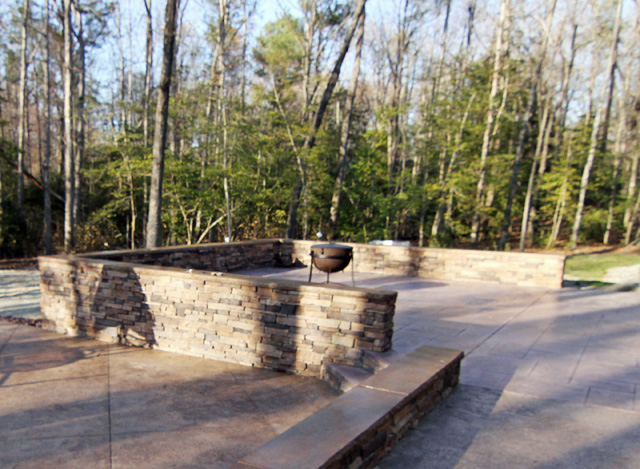
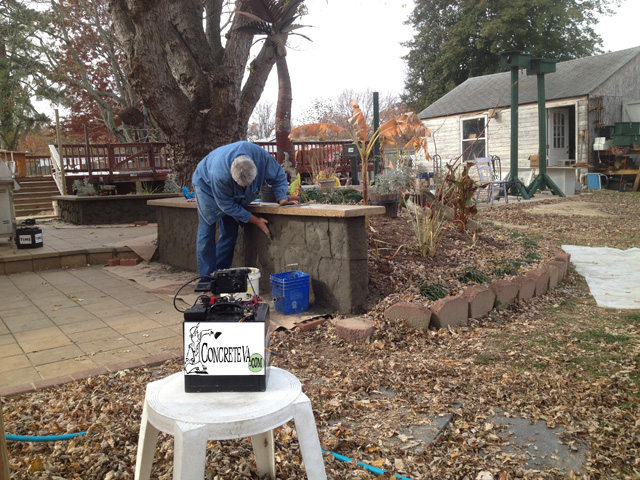
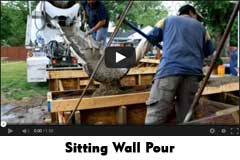
So let me start out by explaning to you what we are illustrating. The sitting wall you see is 100% concrete. We begin by excavating below the frost line. Then,  the wall is formed up with plywood.  A bunch of re- bar is installed,  then the wall gets poured. The bench top is poured along with the wall using a color that the owner has chosen. How do you like the chipped stone edge? The edge is created with a form liner.  A molded piece is installed along the forms before pouring the concrete to create this. Let me mention an important step here and it may be the most important thing you do if you decide to attempt this yourself. Stripping the forms. The bench top is cantilevered over the wall. This is a very weak point in the concrete when the concrete is fresh. By fresh, I mean the concrete is not at full strength yet. It takes approx. 30 days for concrete to reach its full strength. Also when stripping the forms you want to make sure the forms actually “fall” or drop to the ground below. You do not want to apply any upward pressure on the cantilever while stripping the forms. It can create a crack. If it happens you don’t have to worry about the cantilever falling off, it will just be a visual thing.

The next step after stripping the forms is to install the rocks. My rocks are concrete and I apply them with a trowel. The concrete is mixed in a five gallon bucket and is plastic enough to apply at approx. 3/4 to  inch thick. After it hardens to a certain point I then carve the rocks to there shape. Now the fun begins! Transforming the gray concrete into colored stones.

Category : Concrete Sitting Wall | Blog
20
Oct

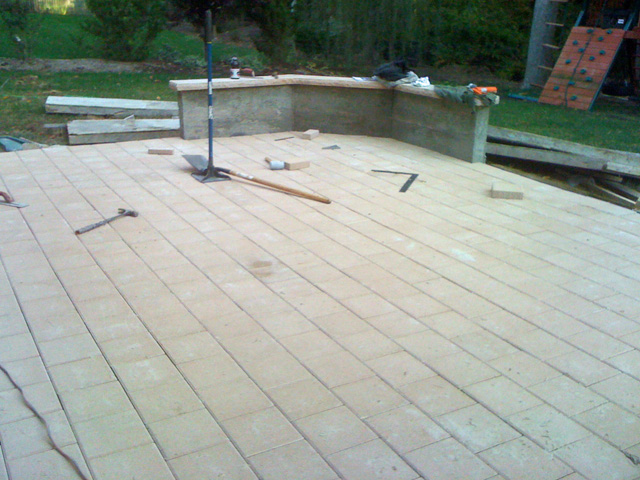
Start 2We started installing the sitting wall and patio this past week. I am going to publish a series of photos along with a video of the whole project start to finish. Let me begin by telling you the process as to our progression. We began by stripping the site of vegetation and topsoil. We brought in 21’s (stone)  spread  and compacted.  The next day we excavated for the sitting wall, formed and poured it. After the wall set over night we stripped the forms and installed sand over the stone. Now we are ready for the pavers as you see here.  Hopefully I can keep your interest so you will come back and watch the installation of the sitting wall, fire pit and patio.

Category : Concrete Sitting Wall | Blog
23
Jul

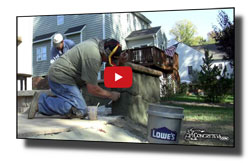
Here we are pouring the concrete sitting wall that surrounds a 125 year old maple tree in Richmond, VA. What you see in the video happens to be the easiest part of the project. Getting too this point was the hardest. The home owner, Jonathon, helped us out immensely. He dug the holes. That was the key to this project, because you don’t pick where the holes go, the tree does. Finding those holes where we could keep the form work symmetrical around the tree was a bear. We were unable to install a typical footing for this project because of the large tree roots. When we finally got around to pouring the wall we put sand at the bottom of the forms over the tree roots. This will give that beautiful old maple some time to grow before it will affect the wall. More pictures will be coming later.

Category : Concrete Sitting Wall | Blog
26
Jun

 This is a job we started about two weeks ago. I collaborated with the owner on the design and layout. Here we have decided to use block as the retaining wall/sitting bench. There is approximately 80 feet of wall. There are going to be two patios an upper and a lower. As you can see in the photos we are using form liners to give the concrete a chipped edge stone look. We will be installing re-bar in the block and bending it out on the cantilevered edge where we will run continuous re-bar around the whole edge. When we pour, we will fill the block with concrete and pour the bench at the same time.

Category : Concrete Sitting Wall | Blog